gold star for USAHOF

Top 50 Los Angeles Angels

In 1951, Los Angeles had no Major League Baseball teams.

In 1961, they had two.

The Los Angeles Angels came into existence in 1961 as an expansion team, and while they were (and are) still secondary to the Dodgers, the constant name changes didn't help.  They went from the Los Angeles Angels (1961-65) to the California Angels (1965-96), Anaheim Angels (1997-2004), Los Angeles Angels of Anaheim (2005-15), and back to the Los Angeles Angels.

The team did not go to their first postseason until 1979, and in 2002, they won their first Pennant, which is, to date, the only one they have captured.  They made the most of their lone World Series appearance, winning it all.

This list is up to the end of the 2024 season.

Note: Baseball lists are based on an amalgamation of tenure, traditional statistics, advanced statistics, playoff statistics, and postseason accolades.
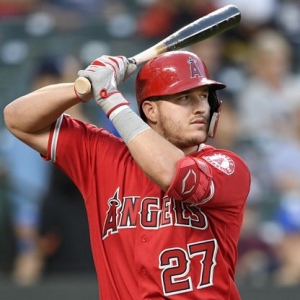
In the modern history of the Anaheim Angels, Mike Trout hasn't just been a superstar; he has been a living, breathing rebuttal to the idea that the "Golden Age" of baseball is behind us. Arriving as a teenager in 2011, he transitioned from a highly touted prospect into a generational force with a speed that caught the league off guard. While he carries himself with a quiet, unassuming dignity, his performance on the grass at Angel Stadium has been a loud, unrelenting display of five-tool mastery. He is the standard by which all other modern outfielders are measured, a player…
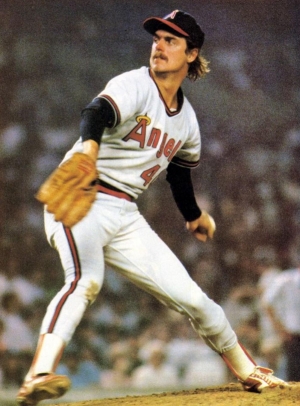
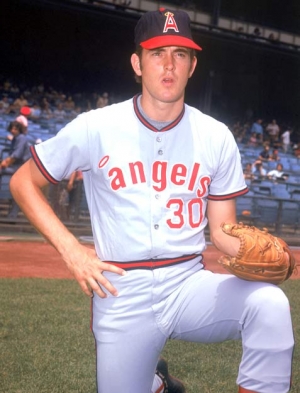
The arrival of Nolan Ryan in Anaheim in 1972 is often cited as the greatest trade heist in baseball history. While the Mets sought a veteran bat in Jim Fregosi, the Angels acquired a lightning bolt in a glove. Ryan didn't just find his footing in California; he transformed into the "Ryan Express," a high-velocity phenomenon that spent eight seasons redefining what was physically possible on a major league mound. While he is a legend in Texas, his years in an Angels uniform were his most explosive, marked by a relentless pursuit of strikeouts and a refusal to let anyone…
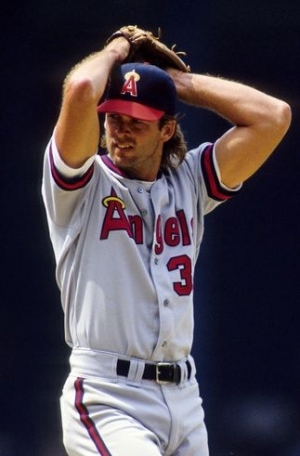
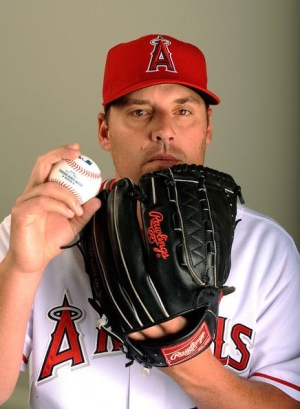
Chuck Finley arrived in Anaheim as a high-velocity southpaw with a localized storm of a split-finger fastball. While he began his journey in the bullpen, he quickly evolved into the most durable workhorse in the history of the franchise. For fourteen seasons, Finley was the left-handed anchor of the Angels' rotation, a player whose longevity and competitive fire allowed him to surpass the win totals of every legend who preceded him in a Halo uniform. Finley’s ascent in California began with a transition from a relief prospect to a frontline starter in the late eighties. He reached a career-defining breakout…
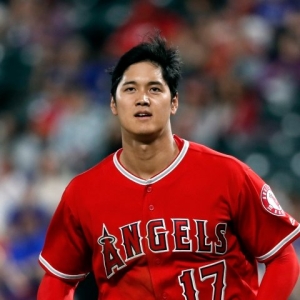
Shohei Ohtani arrived in Anaheim not merely as a player, but as a myth in the making. He was a once-in-a-century anomaly, a two-way titan who promised to bridge the gap between the modern era and the sepia-toned legends of the Deadball age. For six seasons, he turned every afternoon into a laboratory for the impossible, redefining the limits of human athletic achievement. He pitched with the fire of a desert sun and hit with the force of a tectonic shift, a phenomenon whose individual light was often the only thing keeping the franchise from total darkness. Ohtani’s ascent began…
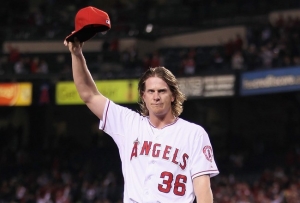
Jered Weaver arrived in Anaheim as a local legend from Long Beach State, a "Dirtbag" with a tall frame and a cross-fire delivery that looked like a tangle of limbs to opposing hitters. He didn't just meet the high expectations placed on him as a first-round pick; he embraced the role of the homegrown ace, providing the Angels with a decade of grit and specialized command. For eleven seasons, Weaver was the heartbeat of the rotation, a pitcher who famously prioritized his loyalty to the franchise over a bigger payday elsewhere. Weaver’s ascent in Anaheim began with a historic surge…
Frank Tanana arrived in Anaheim as a left-handed lightning bolt, a pitcher whose early velocity was so pure it rivaled the thunder of his teammate, Nolan Ryan. While history often places him in the shadow of the "Express," Tanana was a statistical giant in his own right, providing a specialized brand of southpaw dominance that the American League had rarely seen. Tanana’s rise in California began with a 1973 debut, but he reached a career-defining breakout in 1975. That season, the 21-year-old left-hander led the American League with 269 strikeouts and a league-best strikeout-to-walk ratio, signaling his transition from a…
Jim Fregosi arrived in the Angels system as a byproduct of expansion, a young shortstop plucked from the Red Sox who would eventually become the definitive face of the franchise’s first decade. During an era when the team struggled to find its footing in the American League, Fregosi provided a rare combination of defensive stability and offensive punch. Fregosi’s rise in California began almost as soon as the team took the field in 1961. By 1963, he had secured his place as the everyday shortstop, proving that he could handle the rigors of the position while contributing significantly at the…
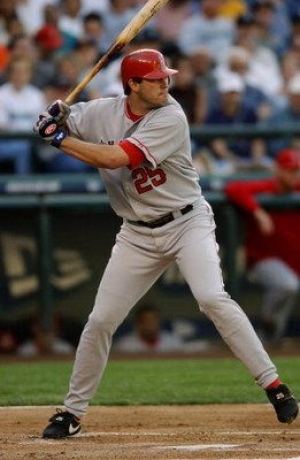
Tim Salmon arrived in Anaheim as a third-round pick who quickly proved he belonged in the heart of the order. For fourteen seasons, he anchored right field with a specialized blend of patience and power, becoming the most productive homegrown hitter in the first half-century of the franchise. While he often flew under the national radar, Salmon provided the Halo with dependability that made him the cornerstone of the lineup during the transition from the California to the Anaheim era. Salmon’s emergence in Anaheim began with a historic 1993 campaign that set the standard for his entire career. After a…
Brian Downing joined the Angels via trade from Chicago in 1978, and the Catcher would go to his first and only All-Star Game in 1979. Downing moved to the Outfield at the start of the 1980s, and he remained with the Angels until 1990.  While he never gained a second All-Star Game appearance, Downing brought a nice balance of power and plate patience.  From 1982 to 1990, Downing had at least 14 Home Runs, peaking with 29 in 1987, which coincided with his league-leading 106 Walks.   As an Angel, Downing had 222 Home Runs and 1,588 Hits and was inducted into the…
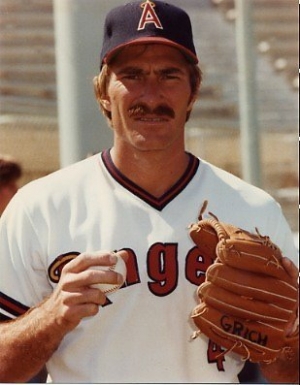
After seven seasons with the Baltimore Orioles, one of the most revered men amongst sabremetricians signed with the California Angels as a Free Agent after the 1976 season. Playing mostly at Second Base, Grich brought his strong defensive skills and patient batting to the Angels.  A three-time All-Star with Baltimore, Grich would go to three more in California.  He would have his best power numbers with the Angels, blasting 30 Home Runs with 101 RBIs in 1979, and he was eighth in MVP voting.  In the strike-shortened 1981 campaign, Grich had 22 Home Runs, which was enough to co-lead the American League.  That year,…
If you were a fan of the Montreal Expos in the 90s and early 00s, you knew that if you had a star, they would eventually leave for greener pastures because your team could not afford to keep them.  Such was the case for Vladimir Guerrero, who, after four All-Star appearances and 234 Home Runs as an Expo, joined the Halos in 2004.   You could say (and we are) that Guerrero saved his best performance for his debut campaign with the Angels.  Guerrero captured the MVP on the strength of 39 Home Runs, 126 RBI, .337/.391/.598 performance and it ushered in a…
One of the most tenured players in Angels history, Garret Anderson suited up for the franchise in 2,013 Games, which at present is a franchise record. Anderson first appeared with the Halos in 1994, four years after he was drafted.  Following that brief call-up, Anderson settled in at Leftfield, where he was one of the better and consistent offensive players at his position for the next ten years.   His peak coincided with the Angels march to the World Series, which they won in 2002, with Anderson going to his first of three All-Star Games that year.  He was also a Silver Slugger in…
In 1995, the California Angels made the number one pick Darin Erstad, a former Golden Spikes Finalist from Nebraska.  Erstad debuted for the Angels the following season, and he was arguably the first building block that would see the team win it all in 2002. Erstad would twice to go the All-Star Game (1998 & 2000), and in his latter All-Star year, the Outfielder had career highs in Batting Average (.355), Home Runs (25), RBIs (100), and led the American League in Hits (240).  Erstad was a crucial part of Anaheim's 2002 World Series Championship, a three-time Gold Glove winner, collecting 25…
Mark Langston was Seattle's best Pitcher, but the Mariners were struggling, and they traded him in his contract year to the Montreal Expos (who sent them a young unknown named Randy Johnson) for their attempt to make the playoffs.  The Expos plummeted (through no fault of Langston) and the flamethrower they rented left to return back to the West Coast, as he signed with the California Angels as a Free Agent in 1990. Langston may not have had the same Strikeout numbers as a Mariner, but he still had a potent fastball.  In his first season with the Angels, he was not…
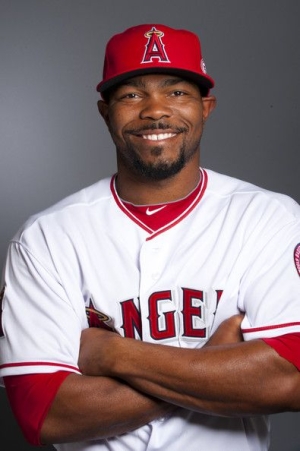
Howie Kendrick was one of the most highly touted prospects in the early 2000s, and while it can be argued that he did not live up to the hype, it can’t be disputed that his long career is the envy of most who ever made it to the Majors. The Angels nabbed Kendrick with their 2002 First Round Pick, and he made the roster in 2006, predominantly playing at Second.  Kendrick was not a defensive star, but he was versatile and often played at First or in Leftfield when needed. Offensively, Kendrick got into a groove, never batting lower than .279 in…
John Lackey’s Major League debut was in June of 2002 where he became a member of the Angels’ starting rotation.  The timing could not have been better for Lackey, who was about to become part of a World Series Championship team.  Lackey won a game in both the ALCS and World Series, and he entered 2003 as a permanent starter.   The hurler was up and down but always showed flashes of greatness and could eat a lot of innings.   Lackey had his best season in baseball in 2007, where he went 19-9, led the American League in ERA (3.01) and ERA+ (150), and…
Dubbed "K-Rod," Francisco Rodriguez established himself as a top reliever when he was a rookie and barely one at that.   Rodriguez was called up in September of 2002, and due to injuries, he was given a vital role in the Angels' postseason, where he had 11 appearances, won five Games, and had a sub 1.000 WHIP in all three of Anaheim’s series.  The Angels won the World Series, and it is hard to imagine this happening without Rodriguez. Proving his performance was no fluke, Rodriguez was a set-up man in 2003 before moving to the closer's role in 2004.  K-Rod was an…
Troy Glaus was the power man of the Angels in the early 2000s, and his role in their 2002 World Series win should be forever celebrated in Southern California. After he was chosen Third Overall in the 1998 Amateur Draft, Glaus made the Angels and was the regular Third Baseman as a sophomore, where he belted 29 Home Runs.  Over the next few years, Glaus was the top power-hitting Third Baseman in the American League, winning the Home Run Title in 2000 (47) and posting an even 1.000 OPS.  In 2000 and 2001, Glaus was both an All-Star and Silver Slugger, and…
Troy Percival debuted in MLB with the California Angels in 1995, where he appeared in 62 Games in late relief, finishing 16 Games.  Percival was fourth in Rookie of the Year voting, and it was a springboard to becoming the Angels’ closer in 1996. Percival was the primary reliever for the Halos from '96 to 2004, going to four All-Star Games, and had at least 30 Saves in all of those years except for 1997.  The Angels had put it all together in 2002, with Percival closing seven games in the playoffs. With Francisco Rodriguez waiting in the wings, Percival left as…