

Top 50 Houston Astros
The Houston Astros debuted in 1962 but not as the Astros, but as the Houston Colt .45’s. The Colt .45’s were short-lived as with the advent of the space program in Houston and the first domed stadium, in 1965, the Houston Astros were officially born.The Astros may not have been the most successful on the field, but the dome (rather domes) and color schemes they used on their uniforms have made them a recognizable team throughout their existence.
Houston would win the National League Pennant in 2005 but would lose to the Chicago White Sox. They moved to the American League in 2014 and became a power, finally winning it all in 2017. They returned to the World Series in 2019 and 2021 but lost to the Washington Nationals and Atlanta Braves repsectively. In 2022, they won their second Championship.
Note: Baseball lists are based on an amalgamation of tenure, traditional statistics, advanced statistics, playoff statistics, and post-season accolades.
This list is up to the end of the 2024 Season.
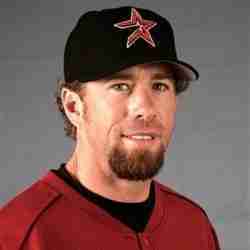
While Jeff Bagwell eventually entered the Hall of Fame in 2017, a call many felt was years overdue, his legacy in Houston was never in doubt. For fifteen seasons, he stood as the definitive identity of the Astros, transforming a scuffling franchise into a perennial powerhouse alongside his "Killer B" partner, Craig Biggio. Though his journey began in the Boston organization, the trade that brought him to Texas for reliever Larry Andersen remains the ultimate cautionary tale in baseball history, as the Red Sox surrendered a future immortal for fifteen games of bullpen help. Bagwell made his presence felt immediately…
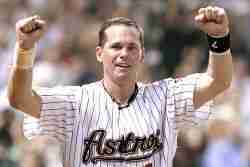
While Jeff Bagwell provided the raw power for the "Killer B’s" era, Craig Biggio served as the relentless engine, a player whose two-decade tenure in Houston was a study in extraordinary versatility and blue-collar grit. From his early days behind the plate to his Gold Glove years at second base and even a tactical move to the outfield, Biggio approached every transition with a workmanlike approach that prioritized the team's needs over his own comfort. He played the game with a "dirty helmet" intensity that made him the soul of the organization, eventually becoming the first player to enter Cooperstown…
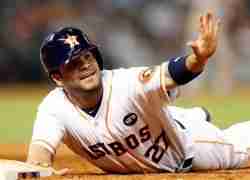
If Jeff Bagwell and Craig Biggio built the foundation of the Houston Astros, Jose Altuve is the man who raised the banners. Standing just 5'6", the Venezuelan second baseman has spent his entire career defying every physical expectation placed upon him, evolving from a "free agent" afterthought into the definitive superstar of the most successful era in franchise history. For over a decade, Altuve has served as the sparking plug of the Houston offense, a hitting machine whose blend of contact, power, and speed has rewritten the organization's record books and cemented his status as a future Hall of Famer.…
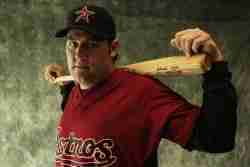
When Lance Berkman broke into the Houston lineup at the turn of the millennium, he joined a roster already defined by two titans of the game. Yet, rather than simply filling a supporting role, the switch-hitting outfielder—affectionately dubbed "Big Puma”, carved out a legacy that stands shoulder-to-shoulder with any great in franchise history. Berkman’s decade in Houston showed elite production from both sides of the plate. After a 1999 debut, he locked in his status as a perennial force by 2001, hitting .331 and leading the league with 55 doubles. This was the first of five seasons in which he…
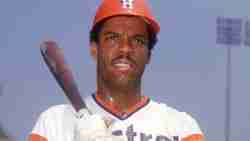
The arrival of Cesar Cedeño in Houston during the summer of 1970 felt like a glimpse into the future of baseball. A teenage prodigy from the Dominican Republic, Cedeño didn't just play center field; he patrolled it with an electric, high-speed elegance that drew immediate comparisons to the game's greatest icons. Before the term "five-tool player" became a common refrain, Cedeño was living it in the Astrodome, combining a lightning-quick bat with a defensive range that seemed to shrink the furthest reaches of the outfield. After a strong rookie showing, he orchestrated a historic run of production starting in 1972.…
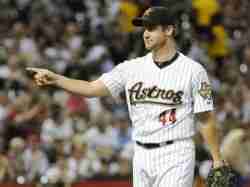
Roy Oswalt’s arrival in Houston in 2001 was like a jolt of electricity to a franchise already boasting legendary arms. A 23rd-round draft pick with a mid-90s heater and a "12-to-6" curveball that dropped off a table, Oswalt skipped the traditional grace period for rookies. He stepped onto the mound at Enron Field and immediately began dismantling big-league lineups with a surgical precision that made his 6'0" frame seem much larger. He burst onto the scene in 2001 with a 14-3 record and a 2.73 ERA, finishing second for the Rookie of the Year and fifth in the Cy Young…
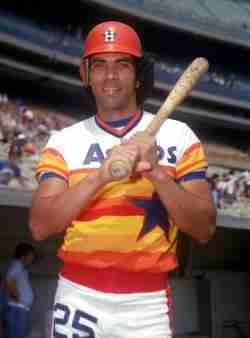
Long before the "Killer B's" took over Houston, the Astrodome belonged to a left-handed contact artist from Puerto Rico named Jose Cruz. Arriving in 1975 after a stint in St. Louis, "Cheo" became the definitive face of the franchise during the most pitcher-friendly era in baseball history. In a cavernous ballpark where home runs went to die, Cruz mastered the art of the line drive, carving out a legacy as one of the most consistent and beloved hitters to ever wear the tequila-sunrise stripes. Cruz’s tenure in Houston was a masterclass in hitting for average and creating chaos on the…
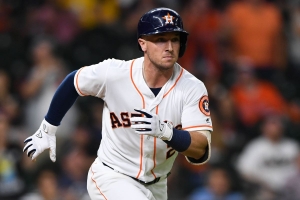
When Alex Bregman took over the hot corner in Houston, the franchise didn't just gain a gold-glove defender; they inherited a psychological edge. A player defined by a relentless, almost obsessive preparation, Bregman arrived mid-2016 and immediately injected a sense of high-stakes swagger into the lineup. He wasn't just a cog in the machine; he became the ignition switch for the most successful era in the organization's history. His best period occurred during the 2018 and 2019 campaigns, finishing in the top five of the MVP voting in back-to-back summers. The 2019 season remains a monument to his craft: a…
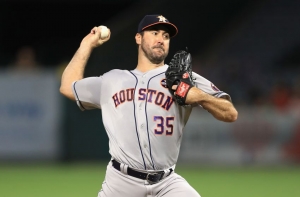
When Justin Verlander stepped off a plane in Houston in the final minutes of August 2017, the trajectory of a franchise shifted instantly. Many across the league viewed the veteran as a spent force whose best days remained in the rearview mirror of a decorated Detroit tenure. Instead, Verlander treated the trade as a career rebirth, evolving from a Motown workhorse into the strategic cornerstone of a Houston dynasty. He arrived as a mercenary hired to hunt a ring and left as a statistical titan who orchestrated a dominant late-career arc in the history of the mound. Verlander’s initial stay…
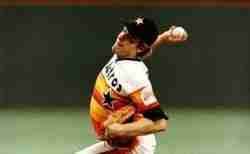
In the mid-1980s, the Houston Astros possessed a psychological weapon that reduced the best hitters in the National League to a state of visible frustration. Mike Scott, armed with a split-finger fastball that seemed to defy the laws of physics, transformed from a struggling former prospect into a high-velocity force of nature. For a five-year stretch in the heart of the "Astrodome era," he wasn't just the ace of the staff; he was a tactical anomaly who could end a game—or a division race—entirely on his own terms. Scott’s tenure in Houston was defined by a historic metamorphosis during his…
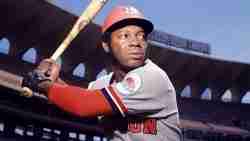
Jimmy Wynn’s career in Houston is a masterclass in why raw box scores can be deceiving. Standing only 5’ 9”, the man they called the “Toy Cannon” spent a decade launching high-frequency drives into the deepest reaches of the cavernous Colt Stadium and the Astrodome—parks that were notorious graveyards for power hitters. While his batting averages often hovered in the .250 range, modern evaluation has revealed a player who was decades ahead of his time, a specialized weapon who valued the walk and the long ball long before they became league-wide standards. Wynn’s ascent in Houston began in 1963 with…
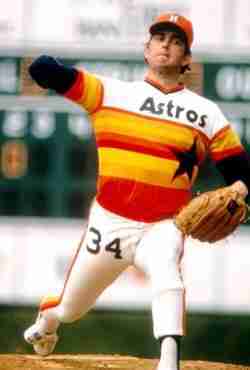
Nolan Ryan’s arrival in Houston in 1980 was a homecoming that doubled as a massive free-agent statement. At 33, an age when most power pitchers are bracing for a decline, the Texas native returned to his roots to become the highest-paid player in the game. While he had already established himself as a strikeout king with the Angels, his nine-season run with the Astros proved he was a physical outlier whose professional resilience could defy the standard aging curve. Ryan’s tenure in Houston began with an immediate high-leverage impact, as he helped anchor the rotation of the 1980 squad that…
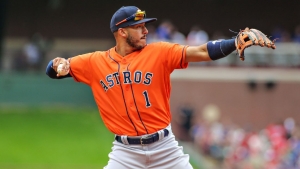
Carlos Correa arrived in Houston as the ultimate symbol of a rebuilding era, carrying the weight of being the first overall pick in 2012. He didn't just meet those expectations; he shattered them with a professional poise that suggested he was born for the high-leverage moments of October. For seven seasons, Correa was the defensive and emotional heartbeat of the most successful run in franchise history, a specialized talent whose combination of range, arm strength, and middle-order power turned the shortstop position into a source of constant advantage for the Astros. Correa’s ascent began with an immediate high-frequency impact in…
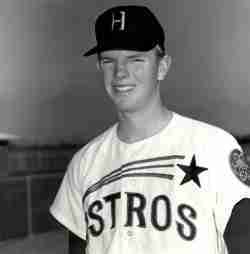
Larry Dierker is the story of the Houston franchise itself, stretching from its infancy as the Colt .45s through the dome-dwelling decades of the Astros. A right-hander with a focused intensity and a professional poise that belied his age, Dierker didn't just grow up in the organization; he became its defining voice and strategist. While he later achieved fame in the dugout and the broadcast booth, his primary legacy was forged on the mound as the first homegrown ace to reach the 20-win plateau in the Lone Star State. Dierker’s ascent in Houston began with a moment of high-leverage theatre…
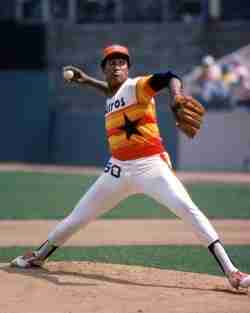
J.R. Richard was a force of nature on the mound, a 6' 8" titan who possessed a velocity that felt like a localized atmospheric event. In an era where the radar gun was just becoming a standard part of the game’s lexicon, Richard was the gold standard for raw, unadulterated power. For a decade in Houston, he wasn't just a starter; he was a phenomenon who terrified hitters with a 100-mph heater and a slider that moved like a ghost. Richard’s arrival in Houston in the early 1970s was a slow-burning evolution, as he worked to harness a lightning-bolt arm…
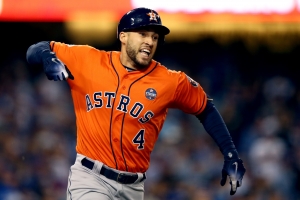
George Springer didn't just join the lineup; he ignited it. For seven seasons, he served as the primary engine at the top of the order, a player whose combination of leadoff power and a fearless defensive approach redefined the center-field position during the most successful era in Astros history. In 2014. As a rookie, he reached a staggering gear early, launching 20 home runs in just 78 games and signaling a transition from a top-tier prospect to a franchise pillar almost immediately. He possessed a focused intensity that made him a nightmare for pitchers trying to settle into a rhythm,…

Yordan Alvarez arrived in Houston as a quiet acquisition from the Dodgers, a player traded before he even suited up for his original club. It did not take long for that transaction to become one of the most lopsided in modern history. Since his debut, the man known as "Air Yordan" has functioned as a pure force of nature in the heart of the order, providing a left-handed power threat that feels like a throwback to the most feared sluggers of the previous century. Yordan Alvarez arrived in Houston as a quiet acquisition from the Dodgers, a player traded before…
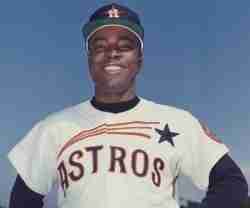
Joe Morgan arrived in Houston as a diminutive spark plug with a specialized batting stance that involved a rhythmic flap of his left arm, a tic designed to keep his elbow up that soon became a nightmare for National League pitchers. While his name is synonymous with the "Big Red Machine" of the seventies, it was in the humid confines of the Astrodome where he first refined the patient, high-velocity style that eventually made him the greatest second baseman of his generation. Morgan’s rise in Houston began during the franchise’s transition from the Colt .45s to the Astros. He reached…
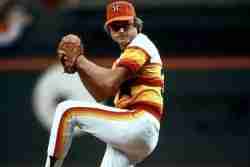
Joe Niekro arrived in Houston as a veteran seeking a second act, a pitcher who had spent nearly a decade wandering through the league before finding the perfect environment for his specialized knuckleball. While he began his journey in the shadow of his Hall of Fame brother, Phil, it was in the climate-controlled air of the Astrodome where Joe truly mastered the butterfly-like motion of his signature pitch. For eleven seasons, he served as the durable anchor of the Houston rotation, proving that a player could reach a career-defining breakout well into his thirties. Niekro’s rise in Houston began as…