gold star for USAHOF

Top 50 Kansas City Royals

An expansion team in 1969, the Kansas City Royals brought baseball back to KC after the Athletics relocated to Oakland in 1967.  The Royals struggled early as expected of any expansion team but they would make their first playoff in 1976 and return in ’77, ’78, and 1980.  The latter year would see the Royals make their first World Series although they would go down in defeat to the Philadelphia Phillies.

The first half of the 1980s was good to the Royals and in 1985 they would put it all together and win the World Series by defeating their cross-state rival, the St. Louis Cardinals in 1985.  The Royals would remain decent for the next ten years (although they did not reach the playoffs) but from the mid 90’s to the early 2010’s organizations did not perform very well and more often than not found themselves in the bottom half of the standings.

After 29 years, the Royals returned to the postseason as a wild card team and advanced to the World Series but were beaten by the San Francisco Giants.  The next year they would return to the World Series but this time they would beat the New York Mets to take their second championship.

Note: Baseball lists are based on an amalgamation of tenure, traditional statistics, advanced statistics, playoff statistics, and post-season accolades. 

This list is updated up until the end of the 2024 Season.
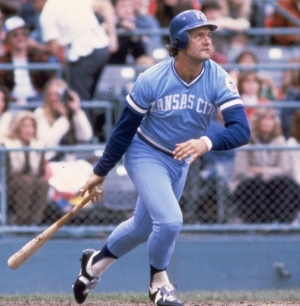
To speak of the Kansas City Royals is to speak of George Brett; the two are functionally inseparable. Arriving in the mid-1970s as a high-intensity third baseman with a violent, beautiful swing, Brett didn't just play for the franchise—he authored its soul. For 21 seasons, he served as the undisputed heartbeat of the organization, evolving from a contact-oriented spark plug into a psychological titan who could dismantle an entire pitching staff through sheer, unadulterated willpower. Brett’s tenure in Kansas City was defined by a pursuit of offensive perfection that reached a historic crescendo during the summer of 1980. That year,…
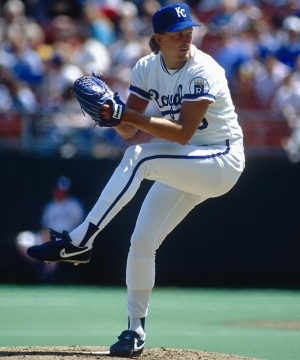
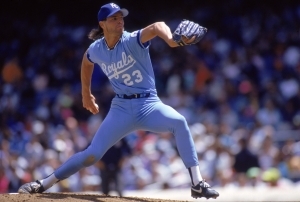
For a decade in Kansas City, following the "Saberhagen Cycle" was the most reliable way to predict the American League pennant race. A slender right-hander with a repeatable, athletic delivery, Bret Saberhagen possessed a specialized command that made him the tactical focal point of the Royals' rotation. While his career was famously defined by an "odd-year" phenomenon, in which he alternated between human fallibility and untouchable dominance, his peaks were so high that they reshaped the franchise's history. In 1985, at just 21 years old, he displayed a professional resilience far beyond his years, capturing his first Cy Young Award…
The story of Kevin Appier in Kansas City is a testament to the quiet, analytical brilliance that often goes unrecognized in real-time. While he never commanded the national spotlight with 20-win seasons or a shelf full of Cy Young trophies, "Ape" was a statistical marvel who spent the 1990s dismantling American League lineups with a deceptive, high-intensity delivery. He served as a solitary lighthouse for a franchise navigating a difficult transitional era, proving that an elite arm could maintain world-class efficiency even without the support of a powerhouse roster. Appier’s tenure in the Heartland was defined by a surgical, high-frequency…
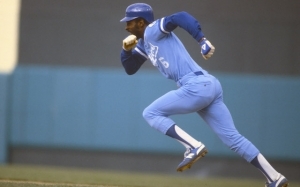
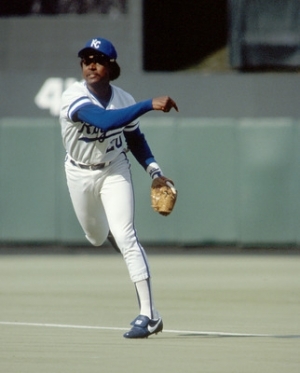
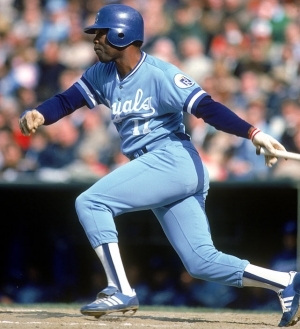
If George Brett was the foundation of the Kansas City Royals, Willie Wilson was the high-octane fuel that made the machine run. A first-round draft pick with world-class speed, Wilson transformed the leadoff spot into a theater of the frantic, forcing opposing pitchers into a state of permanent anxiety the moment he stepped into the box. While his career is occasionally shadowed by a difficult chapter in 1983, his legacy in the Heartland is defined by a decade and a half of pure, unadulterated athleticism that helped propel the franchise to the peak of the baseball world. Wilson’s tenure in…
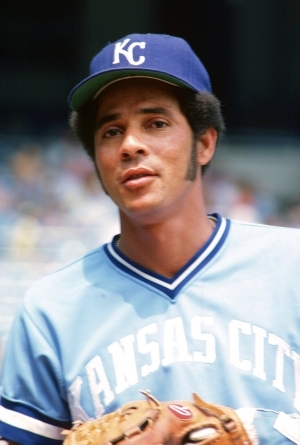
The New York Mets’ decision to part with Amos Otis in 1969 remains one of the most lopsided clerical errors in baseball history. While the Mets saw a player who didn't quite fit their mold, the expansion Kansas City Royals recognized a foundational catalyst. Arriving in the Midwest just as the franchise was finding its pulse, "A.O." didn't just occupy center field; he patrolled it with a predatory grace that defined the "Royal Way" for more than a decade. He was the prototype for the organization’s identity, a high-speed athlete who turned the cavernous gaps of Royals Stadium into his…
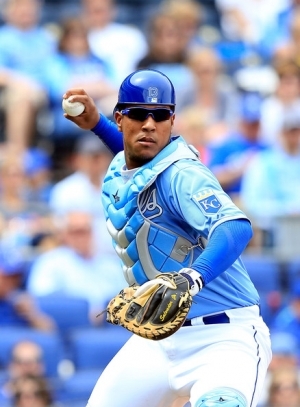
The arrival of Salvador Perez in Kansas City in 2011 didn't just provide the Royals with a catcher; it gave the franchise its emotional compass. A jovial, high-energy presence from Venezuela, "Salvy" quickly transitioned from a defensive specialist into a tactical powerhouse who could break a game open with a single swing. Perez’s career was defined during the 2015 World Series. That October, he didn't just manage a championship pitching staff; he dictated the tempo of the Fall Classic, batting .364 and earning World Series MVP honors as the Royals secured their first title in thirty years. He was a…
While George Brett was the thunder of the Kansas City dynasty, Frank White was the lightning-quick glove that held the infield together. A local product who literally helped build the stadium where he eventually became a star, White spent eighteen seasons as the gold standard for defensive excellence at second base. White’s tenure in the Midwest was defined by a surgical, high-frequency brilliance in the field. His defensive command was on full display by capturing eight Gold Gloves, a total that solidified his reputation as the premier vacuum of the American League. Nicknamed "Hoover" for his specialized ability to inhale…
Dan Quisenberry was a machine in an era of flame-throwing closers. While his peers were busy trying to blow the ball past hitters, "Quiz" was busy making them look foolish with a submarine delivery and a sinking fastball he famously nicknamed "Peggy Lee”, because the first time a hitter saw it, they’d ask, "Is that all there is?" For the first half of the 1980s, his pinpoint control and unconventional style turned the late innings at Royals Stadium into a graveyard for American League rallies. Quisenberry’s ascent in Kansas City began with a definitive tactical shift in 1980. After a…
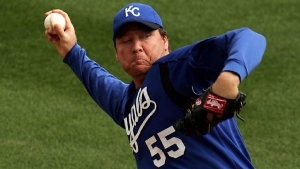
Mark Gubicza, affectionately known as "Goobie," was the definition of a workhorse for the Kansas City Royals. While he often pitched in the shadows of Cy Young winners like Bret Saberhagen, Gubicza was a high-frequency anchor who combined a fierce competitiveness with a specialized ability to keep the ball in the yard. For over a decade, he transitioned through every role in the rotation, eventually leaving the diamond as the franchise's all-time strikeout leader and a pillar of their 1980s glory. Gubicza’s ascent in Kansas City began as a 21-year-old in 1984, but during the 1985 championship run. As a…
Hal McRae was the definitive prototype for the modern designated hitter, a man who transformed a newly created rule into a specialized art form. When he arrived in Kansas City in 1973 via a trade with the Reds, the Royals weren't just acquiring a bat; they were securing the competitive heartbeat of their franchise for the next fifteen seasons. McRae didn't let his defensive limitations define him; instead, he focused his intensity entirely on the batter's box, proving that a player could become a franchise pillar by mastering the psychological and tactical demands of the DH role. McRae’s ascent in…
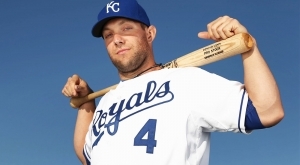
Alex Gordon arrived in Kansas City with the immense weight of being the second overall pick and the consensus best amateur player in the country. While the early chapters of his career were defined by a difficult search for an identity at third base, his transition to the outfield transformed him into the defensive heartbeat of the franchise. For fourteen seasons, Gordon embodied a blue-collar resilience that resonated in the Heartland. After a few inconsistent seasons in the infield, he reached a career-defining pivot in 2011. Moving permanently to left field, he combined a newfound defensive comfort with a violent,…
Zack Greinke’s path in Kansas City was a study in profound professional resilience. Arriving as a highly touted first-round pick in 2002, he quickly found that the weight of expectation, combined with personal battles with social anxiety and depression, nearly derailed his career before it truly began. After stepping away from the game entirely in 2006 to reset his mental health, Greinke returned with a recalibrated mindset and a tactical approach that transformed him from a struggling prospect into the most dominant arm in the American League. Greinke’s climb back to the mound reached a major turning point in 2008.…
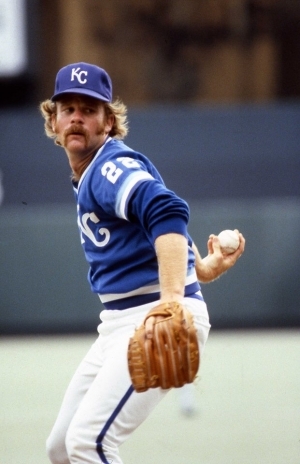
Dennis Leonard was the relentless engine of the Kansas City rotation during their first golden era, a right-hander whose durability was as steady as the mustache he famously wore. In an age where the Royals were constantly battling for American League supremacy, Leonard provided a high-frequency workload that turned him into the winningest right-hander in the sport over a seven-year stretch. Leonard’s ascent in Kansas City began in 1974, but he reached a major turning point in 1975 when he secured 15 wins and proved he could handle the demands of a full season. He possessed a focused intensity that…
John Mayberry arrived in Kansas City as the first true home run threat for a young franchise, a massive left-handed presence who provided the lineup with an immediate injection of power. For six seasons, he was the primary engine of the Royals' offense, a player whose ability to drive the ball over the fence was matched only by a specialized eye for the strike zone that kept him among the league leaders in on-base percentage. Mayberry had an immediate impact in 1972 after a lopsided trade with Houston. He reached a career-defining breakout in his debut season with the club,…
Mike Sweeney arrived in Kansas City as a 10th-round pick with a catcher's mitt and a bat that would eventually make him the heart and soul of the franchise. While he began his journey behind the plate, his path to becoming a Royals legend was paved by a transition to first base and designated hitter, where his offensive production could carry a team through a difficult era. For thirteen seasons in a Royals uniform, he was a beacon of character and consistency, a player who famously wore the captain's "C" on his jersey and served as the bridge between the…
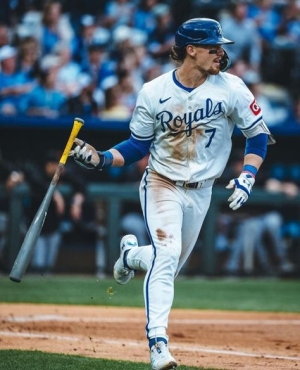
Bobby Witt Jr. arrived in Kansas City as the centerpiece of a franchise-wide reset, a second-overall pick tasked with carrying the legacy of a championship era into a new generation. From the moment he stepped onto the grass at Kauffman Stadium, he has played with a high-velocity style that combines historic speed with a specialized power stroke. While the team faced a steep climb back to relevance following their 2015 title, Witt has been the primary engine of a resurgence that has transformed the Royals into a postseason threat once again. Witt’s emergence in Kansas City began with a rapid…
In Jeff Montgomery’s rookie year with Cincinnati, he made one start in fourteen games.  He would be traded to the Royals where he would never start again, and never play for anyone else.
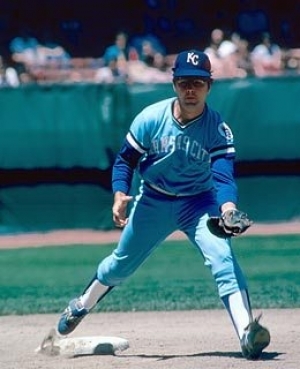
A fixture in the Kansas City Royals infield throughout the 1970’s Freddie Patek brought a strong defensive presence to the lineup.  While Patek never won a Gold Glove, he was the American League leader in Defensive bWAR and Total Zone Runs in 1972.
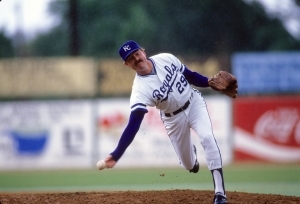
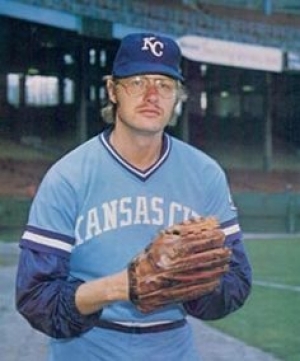
If we were to this list based primarily on longevity and statistical accumulation then Paul Splittorff would be near the top, however, it is hard for us to rank someone higher when he never seriously challenged for any statistical win among hurlers in any season, nor was he really considered the ace of the staff by those in the know.