

Top 50 Detroit Tigers
Founded in 1901, the Detroit Tigers have been staples in the American League since its inception.The Tigers have had their ups and downs for sure, but the team has been in the World Series eleven times and won the Fall Classic four times in 1935, 1945, 1968, and 1984.
With over a century of players to choose from, the Top 50 Detroit Tigers is loaded with Hall of Famers, should have beens and future Cooperstown performers.
Note: Baseball lists are based on:
- Sabremetric tallies while with that team, mostly WAR.
- Traditional metrics and how they finished in their respective league overall.
- Playoff accomplishment.
- Their overall impact on the team and other intangibles not reflected in a stat sheet.
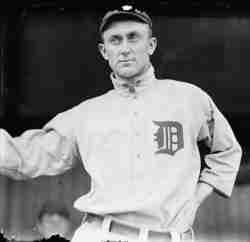
Ty Cobb’s arrival in Detroit in 1905 signaled the birth of a dynasty built on sheer force of will. He surfaced as an eighteen-year-old prodigy and matured instantly into the league’s premier offensive weapon, reaching a level of dominance that essentially turned the American League into his personal playground. He possessed a specialized, split-grip swing that prioritized bat control and field awareness, allowing him to capture a staggering eleven Batting Titles. This craftsmanship was not merely about contact; he was a model of total offensive efficiency, authored by eight slugging titles and ten seasons atop the OPS leaderboards, proving that…
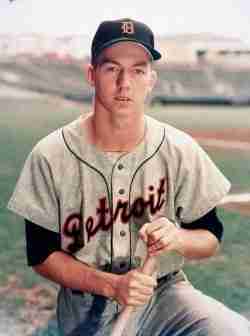
Al Kaline’s path to Detroit was a masterstroke of scouting, signed as a "bonus baby" out of high school in 1953 and maturing instantly into a phenom. He reached a historic threshold in 1955 when, at just 20 years old, he became the youngest player ever to capture a batting title with a .340 average, surpassing the mark previously held by Cobb himself. He was a model of specialized consistency, proving that he could maintain an elite offensive output while navigating the physical demands of the outfield. Throughout his stay, he emerged as a fixture on the leaderboards, finishing in…
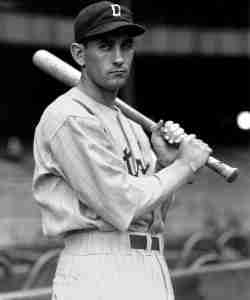
Scouted by Ty Cobb himself, Charlie Gehringer arrived in Detroit in the mid-1920s and matured instantly into the most consistent infielder of his generation. He possessed a specialized, level swing that produced line drives with an almost automated frequency, authoring a career that featured seven seasons with over 200 hits. His craftsmanship was defined by a quiet dominance, leading the Junior Circuit in hits on two occasions and navigating the era’s physical demands with a professional resilience that kept him atop the leaderboards for years. The true breakthrough for the franchise arrived in 1935, when Gehringer’s steady production served as…
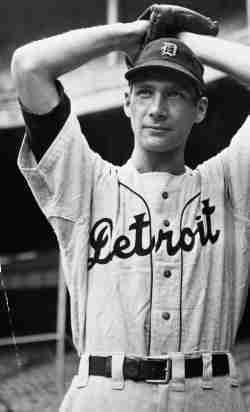
While many pitching legends were carved into the history books during the deadball era, Hal Newhouser’s peak emerged amidst the fires of the 1940s, a period where he stood as the undisputed titan of the mound. Known as "Prince Hal" for his dignified presence—and occasionally "Hurricane Hal" for his fiery competitive streaks—the Detroit native stayed home while others went to war, held back by a heart condition that would paradoxically allow him to lead his hometown team to the absolute summit of the sport. His legacy is etched in a rare back-to-back MVP achievement, a feat that remains the benchmark…
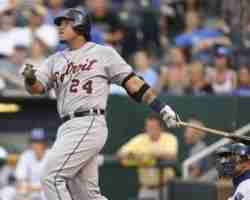
When the Florida Marlins sent Miguel Cabrera to Detroit in late 2007, they didn't just trade a superstar; they gifted the Motor City a generational icon who would go on to rewrite the franchise record books. Already a World Series champion upon arrival, the Venezuelan phenom elevated his game to a level of offensive mastery rarely seen in the modern era. Cabrera’s transformation into a Detroit immortal began the moment he donned the Old English "D," immediately anchoring a lineup that would become the class of the American League. He established a standard of specialized excellence that few could mirror,…
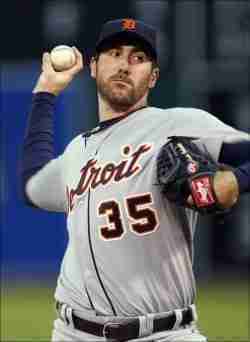
The arrival of Justin Verlander in 2005 was the first tremor of a seismic shift in Detroit baseball. While he debuted as a high-velocity prospect, he quickly matured into the undisputed titan of the American League, a right-hander whose combination of an elite fastball and a relentless competitive fire restored the Tigers to national relevance. Across two distinct eras in the Motor City, Verlander evolved from a fireballing Rookie of the Year into a sophisticated, first-ballot immortal, serving as the high-leverage anchor for a decade of championship aspirations. Verlander’s rise was instantaneous, capturing the 2006 Rookie of the Year award…
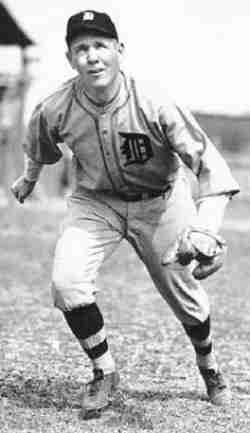
While the shadow of Ty Cobb loomed large over the Detroit outfield for two decades, it was Harry Heilmann who emerged as the most refined right-handed hitter of the 1920s. Often overlooked because he shared the grass with the "Georgia Peach," Heilmann actually served as Cobb’s most successful protégé, crediting the legend’s mentorship for his transformation from a struggling first baseman into a batting champion. With a swing as smooth as it was powerful, "Harry the Horse" became the primary engine of the Tigers' offense during a decade in which he made hitting over .390 look routine. Heilmann’s tenure in…
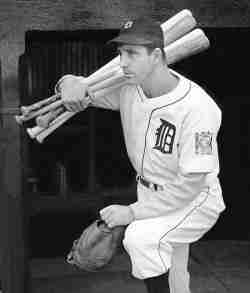
The story of Hank Greenberg is an intriguing "what-if" narrative in the history of the game. For twelve years, he was the heartbeat of the Detroit Tigers, a man whose presence in the lineup guaranteed a level of offensive production that bordered on the surreal. Yet, his legacy is defined as much by his absence as his presence; as the first major star to enlist in the military during World War II, he surrendered 47 months of his absolute athletic prime to the service of his country. Had he not spent those four years in the Army Air Forces, the…
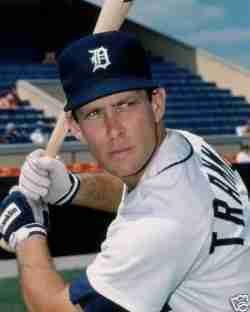
For two decades, Alan Trammell was the steady, brilliant pulse of the Detroit Tigers. Arriving as a teenager in 1977, he didn't just occupy the shortstop position; he revolutionized it alongside his double-play partner, Lou Whitaker. Together, they formed the longest-running middle infield duo in the history of the sport, a partnership that defined the Tigers' identity throughout the 1980s. While he often found himself in the shadow of contemporary giants like Cal Ripken Jr., Trammell’s mix of defensive elegance and offensive punch eventually forced the baseball world to acknowledge him as one of the premier shortstops of any generation.…
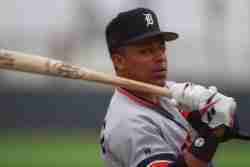
The story of Lou Whitaker is one of the most baffling oversights in the annals of Cooperstown, a narrative where the traditional gatekeepers somehow missed a generational masterpiece hidden in plain sight. For 19 seasons, "Sweet Lou" was the left-handed half of the most enduring double-play tandem in baseball history, patrolling second base for the Detroit Tigers with a grace that made the difficult look routine. While he famously vanished from the Hall of Fame ballot after just one year in 2001, the modern lens of analytics has reaffirmed what Tiger fans knew all along: Whitaker wasn't just a star;…
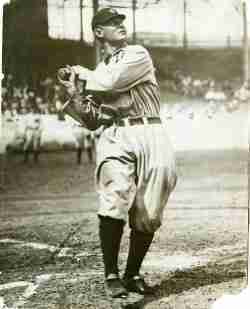
The Deadball Era was a landscape of dust, grit, and massive outfields, and no one navigated that terrain with more explosive speed than "Wahoo" Sam Crawford. While his legendary teammate Ty Cobb utilized a serrated edge of psychological warfare and placement, Crawford relied on a heavy barrel and a sprinter’s kick. He arrived in Detroit in 1903 as an established star and proceeded to turn the triple into an art form. Crawford led the American League in triples five separate times as a Tiger, utilizing the cavernous gaps of the era to outrun the defense. His style was a unique…
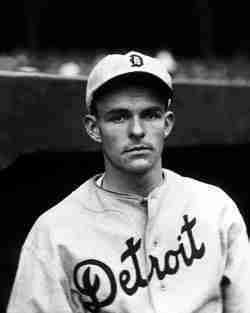
In the history of the Detroit Tigers, few players have personified "pound-for-pound" greatness quite like Tommy Bridges. A diminutive right-hander who stood barely 5'10" and weighed just 150 pounds, Bridges used one of the most devastating curveballs in the history of the sport to anchor the Detroit rotation for sixteen years. Bridges’ time in Detroit was marked by relentless, high-frequency dominance, during which he became the franchise's primary strikeout threat for over a decade. He reached a peak between 1934 and 1936, a three-year stretch where he rattled off three consecutive 20-win seasons. During this span, he led the American…
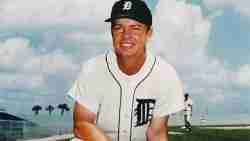
The 1961 baseball season is immortalized by the pinstriped pursuit of Babe Ruth’s ghost, but while the world watched Roger Maris and Mickey Mantle, Norm Cash was quietly putting forth one of the greatest offensive anomalies in the history of the sport. Arriving in Detroit a year prior in a lopsided trade with Cleveland, "Stormin' Norman" evolved into a left-handed powerhouse whose swing was as distinctive as his colorful personality. Cash spent fifteen seasons as the defensive and emotional heartbeat of the Tigers' infield, blending a Texas-sized sense of humor with a bat that could leave Tiger Stadium in a…
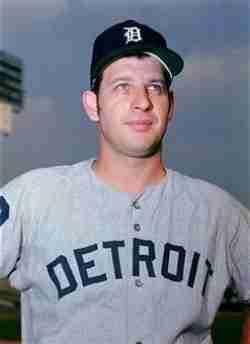
For much of his tenure in Detroit, Mickey Lolich operated as the persistent, left-handed shadow to more flamboyant headlines. While others captured the national imagination with historic win totals or fiery personalities, Lolich simply went to work, building a resume defined by a relentless, rubber-armed durability. He wasn't just a cog in the rotation; he was the primary engine of the Tigers' pitching staff for over a decade. Lolich’s time in the Motor City was a study in high-volume excellence. He established himself as a model of specialized endurance, eventually setting franchise records for starts (436), innings pitched (3,361.1), and…
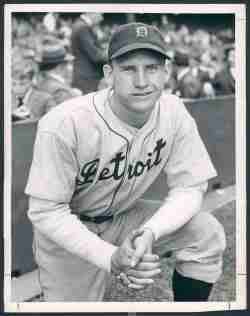
The story of "Dizzy" Trout is a fascinating narrative of a pitcher who became a titan of the American League during one of baseball's most unique eras. For fourteen seasons, Trout was a mainstay of the Detroit Tigers' rotation, evolving from a struggling young arm into one-half of the most feared pitching duo in the game. While he thrived during the depleted years of World War II, his longevity and professional resilience allowed him to remain a tactical asset for Detroit long after the stars returned from overseas. When he debuted in 1939, he arrived with a "Dizzy Dean" persona,…
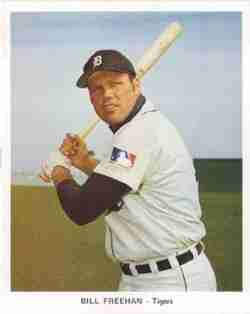
Bill Freehan’s journey in Detroit began as a local standout at the University of Michigan before arriving in the Tigers' clubhouse in the early 1960s. After a brief cup of coffee, he took over the starting catching duties in 1963 and immediately established a reputation for physical resilience. By 1964, he had earned his first All-Star nod—the start of a ten-year streak where he was virtually synonymous with the American League starting lineup. He wasn't a flashy performer; he was a model of specialized durability who played through the bruises and foul tips that defined the era's catching experience. As…
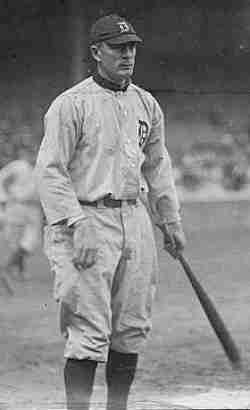
Bobby Veach had the singular misfortune of being an elite ballplayer who spent his entire prime in the physical and historical shadow of three Hall of Fame legends. While he patrolled left field for the Detroit Tigers, the other two spots in the grass were occupied by Ty Cobb and either Sam Crawford or Harry Heilmann. Because he wasn't a "character" like Cobb or a refined technician, Veach was often dismissed as a mere product of his environment, a "cleanup hitter" who just happened to be standing there when Cobb and Crawford crossed the plate. But a look at the…
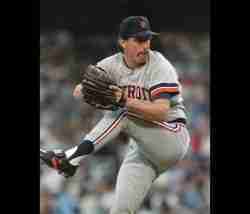
Jack Morris was the definitive workhorse of his era, a pitcher who didn't just inhabit the rotation; he owned it. For fourteen seasons in Detroit, he was the embodiment of the "big game" starter, a man whose competitiveness was as legendary as the split-fingered fastball that eventually made him the winningest pitcher of the 1980s. While he wasn't always a darling of the scouts who favored efficiency over grit, Morris possessed a specialized durability that allowed him to finish what he started, leading the league in innings and complete games while anchoring a championship staff. Morris’ ascent in Detroit began…
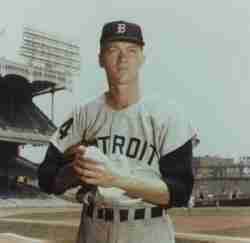
The trajectory of Jim Bunning in Detroit is a study of a specialized technician who arrived as a project and left as an elite hurler. While he is often associated with the perfect game he later threw in Philadelphia, Bunning’s professional foundation was built in the Motor City. For nine seasons, he served as the high-frequency engine of the Tigers' rotation, a sidearm-throwing right-hander whose deceptive delivery and focused intensity made him one of the most difficult matchups in the American League during the late 1950s. Bunning’s ascent in Detroit began in earnest in 1957, a season that served as…