gold star for USAHOF

Top 50 Chicago White Sox

An inaugural team when the American League formed in 1901, the Chicago White Sox were first called the Chicago White Stockings, but that would be a brief moniker as they would shorten that to the Chicago White Sox, the name that they hold today.

Despite the lengthy existence of the franchise, this has not been one of the more successful teams in the AL.  Chicago won their first World Series in 1906, and in 1917 they captured their second.  In 1919, they were considered the best team in baseball and were expected the crush the Cincinnati Reds of the National League.  Chicago lost, and it later came out that the players on the team conspired to throw games for financial benefit.  The ChiSox struggled for decades after and would not win another Pennant until 1959.  They lost the World Series, and it would take until 2005 until they reached the Fall Classic again.  This time, they won, marking their third World Series win.


This list is up to the end of the 2025 season.

Note: Baseball lists are based on an amalgamation of tenure, traditional statistics, advanced statistics, playoff statistics, and post-season accolades.
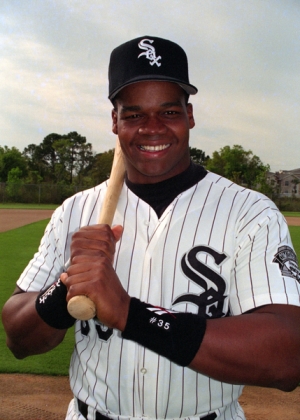
When Frank Thomas took his first hacks at Comiskey Park in 1990, the baseball world wasn't quite prepared for the paradox he represented. He was a 6'5", 240-pound mountain of a man who looked like he belonged on a football field, and indeed, he had played tight end at Auburn. But unlike Oakland’s Bash Brothers (Jose Canseco and Mark McGwire) of the era, who relied on raw, unrefined strength, Thomas arrived with the most sophisticated hitting eye in the American League. He didn't just want to hit the ball over the wall; he wanted to dominate the pitcher intellectually. For…
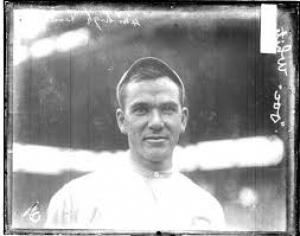
When "Big Ed" Walsh broke into the White Sox rotation in 1906, he brought with him a devastating new toy: the spitball. He had learned the pitch from teammate Elmer Stricklett, but Walsh refined it with a terrifying level of control, claiming he could "hit a tack on a wall" with it. That season, he pitched the "Hitless Wonders" to a World Series title over the crosstown Cubs, striking out 12 in a single game and proving that he was the premier big-game hunter in the city. It was the beginning of a seven-year stretch where Walsh tested the very…
When Luke Appling arrived in Chicago in 1930, he didn't exactly set the world on fire. Purchased from Atlanta for a modest sum, he spent his first few years struggling to adjust to Big League pitching, batting a mere .232 in his first full season. However, by 1932, the White Sox handed him the keys to the shortstop position and the leadoff spot, beginning a transformation from a struggling prospect into the most difficult "out" in the American League. Appling developed a legendary, almost irritating ability to spoil good pitches, fouling off ball after ball until he got exactly what…
Ted Lyons arrived in Chicago in 1923 straight from the campus of Baylor University, trading a future law degree for a baseball glove. In a feat that remains almost unheard of in the modern era, Lyons bypassed the minor leagues entirely, making his professional debut at the Major League level. He spent his first two seasons acclimatizing in the bullpen before finding his stride as a starter in 1925. In those early years, he was a traditional power pitcher, racking up two 20-win seasons by the time he was 26. He was the young, hard-throwing future of the South Side,…
Urban "Red" Faber arrived in Chicago in 1914 and wasted little time proving he belonged in the upper echelon of American League arms. By his second season, he was a 24-win force, utilizing a deceptive spitball that would eventually make him one of the last "legal" practitioners of the pitch after it was banned in 1920. His early career reached a fever pitch in 1917, when he spearheaded the White Sox’s march to a World Series title, capturing three victories in the Fall Classic and establishing himself as the staff’s big-game engine. The trajectory of Faber’s career was nearly derailed…
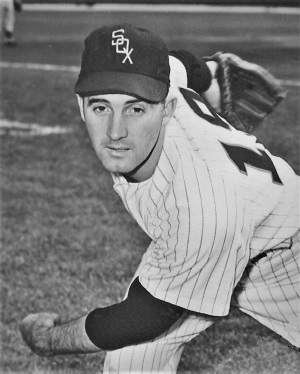
When Billy Pierce arrived in Chicago in 1949 via a trade with the Detroit Tigers, he was a slight, 160-pound left-hander with a live arm and a questionable sense of control. The Tigers thought he was too small to handle a starter’s workload; the White Sox saw a diamond in the rough. Over the next thirteen seasons, Pierce would prove Detroit’s front office wrong in historic fashion, evolving from a wild young prospect into the most dominant southpaw in the history of the franchise. His tenure was defined by an elite blend of velocity and a devastating slider that made…
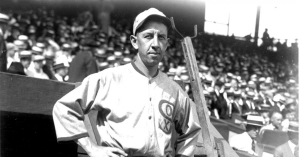
When Eddie Collins stepped off the train in Chicago in 1915, he was the most expensive piece of baseball real estate in the country. The White Sox had shelled out a staggering $50,000 to pry him away from the Philadelphia Athletics, essentially buying the reigning American League MVP to anchor their infield. Collins didn't just meet the lofty expectations; he redefined them. He arrived as a finished product—a cerebral, high-contact second baseman who played the game like a grandmaster moving chess pieces. His early years in Chicago were defined by championship efficiency. Collins was the tactical engine of the 1917…
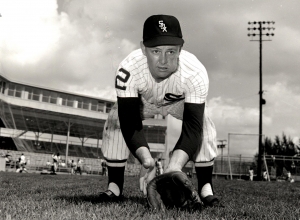
When the White Sox sent Joe Tipton to the Philadelphia Athletics in exchange for Nellie Fox following the 1949 season, they weren't just making a trade; they were altering the course of their franchise history. While Tipton faded into obscurity, Fox arrived on the South Side and immediately set up a permanent residence at second base. He was a small man with a giant wad of tobacco in his cheek and a bottle-shaped bat that he used to torment American League pitchers for the next fourteen years. He didn't just play for the Sox; he personified the scrappy, high-octane brand…
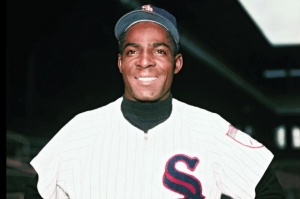
In terms of iconic figures, would have been wrong if we placed Minnie Minoso at number one?  Clearly, we didn't, but the native of Havana, Cuba, will always be one of the most revered athletes in the history of Chicago.
When Eddie Cicotte arrived in Chicago during the 1912 season, he was viewed as a talented but erratic castoff from the Boston Red Sox. Management in Boston had grown tired of his inconsistency, but the change of scenery provided the spark for one of the great pitching transformations of the Deadball Era. Cicotte became a true student of the craft, perfecting the knuckleball and later adding a "shine ball" and a spitball to a repertoire that kept hitters in a state of permanent confusion. By 1913, he was already emerging as a premier arm, posting a microscopic 1.58 ERA and…
When Wilbur Wood was acquired from the Pittsburgh Pirates in 1966 for a player to be named later, the transaction barely registered as a footnote in the local papers. He arrived as a 25-year-old who had spent years oscillating between the majors and minors, unable to find a permanent home or a consistent out-pitch. However, the trajectory of his career changed forever when he crossed paths with the legendary Hoyt Wilhelm. Under Wilhelm’s tutelage, Wood fully committed to the knuckleball, a decision that would transform him from a roster afterthought into the busiest man in baseball. His initial residency in…
When Mark Buehrle was drafted in the 38th round in 1998, nobody expected him to become the cornerstone of a championship rotation. He arrived in the majors in 2000 as a soft-tossing southpaw with a pace of play that felt like he had a dinner reservation he was running late for. By 2001, he had already surged into the upper echelon of American League starters, posting a 16-8 record and leading the league with a 1.066 WHIP. He didn't blow hitters away; he simply refused to let them get comfortable, relying on pinpoint finesse and a competitive rhythm that got…
When Chris Sale was drafted 13th overall in 2010, the White Sox weren't interested in the traditional developmental curve. He arrived in Chicago just two months after being drafted—the first member of his class to reach the majors. Standing 6'6" and seemingly composed entirely of long, whip-like limbs, he earned the nickname "The Condor." To hitters, his delivery was a nightmare of shifting angles that made his 98-mph heater feel like it was being released from behind their own ears. He spent his first full year in 2011 as a dominant relief weapon, but everyone in the organization knew that…
Doc White arrived on the South Side in 1903 following a brief but brilliant stint with the Philadelphia Phillies. A graduate of Georgetown’s dental school, White brought a clinical precision to the mound that immediately translated to the American League. While he lacked the overwhelming power of some of his contemporaries, he was a master of the sinker, the curve, and the spitball, utilizing a cerebral approach to keep hitters off-balance. His residency in Chicago began with a literal bang; in 1904, he set a Major League record by tossing five consecutive shutouts, a feat of durability and dominance that…
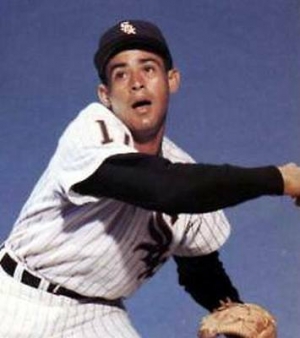
When Luis Aparicio arrived on the South Side in 1956, he didn't just fill a hole at shortstop; he ignited a revolution. As the first Latin American player to be named Rookie of the Year, he immediately signaled that the game was changing. He led the American League with 21 stolen bases in his debut season, a feat he would repeat for the next eight consecutive years. In an era where many teams were content to station stationary power hitters on the corners, Aparicio was a blur of motion, forcing pitchers into mistakes simply by his presence on the bag.…
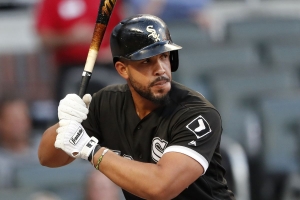
The middle of his Chicago residency was defined by a level of "Traditional Dominance" that was almost metronomic. From 2014 to 2017, Abreu was a lock for 25 home runs and 100 RBIs every single summer, batting at least .290 along the way. While the team around him underwent a painful and protracted rebuilding process, Abreu remained the steady hand in the middle of the order. He was a three-time All-Star who led by example, playing through injuries and serving as a mentor to the influx of young Cuban talent that followed in his footsteps. His 2019 season served as…
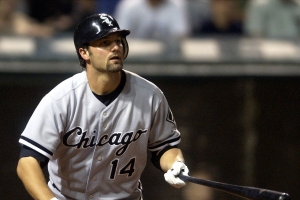
When Paul Konerko arrived in Chicago in 1999 via a trade with the Cincinnati Reds, he was a young hitter searching for a permanent home. The White Sox sent away a dynamic talent in Mike Cameron to get him, a move that initially raised eyebrows but quickly proved to be a stroke of genius. Konerko didn't waste time establishing his residency at first base, launching 24 home runs in his debut season and proving that his compact, powerful swing was perfectly suited for the South Side. He arrived as a promising trade piece and immediately began his transformation into the…
When Joe Jackson arrived in Chicago via a trade with Cleveland in 1915, he was already a certified legend of the diamond. A simple man from the South Carolina mills who never learned to read or write, he spoke through his legendary bat, "Black Betsy." His residency on the South Side began with the same relentless production that had defined his early years; he was a metronome of contact, never finishing a season with the White Sox with a batting average below .300. He arrived as the premier offensive force in the American League, a man whose .356 career average…
When Robin Ventura arrived on the South Side in 1989, he was the crown jewel of the White Sox farm system, a first-round pedigree with a legendary collegiate resume. While he initially struggled to adjust to big-league pitching, he soon found his rhythm, evolving into a surgical, left-handed threat who provided a perfect counterweight to Frank Thomas in the lineup. He arrived as a high-potential prospect and matured into a defensive institution at third base, but his tenure would ultimately be defined by a single, scorching August afternoon in Texas. Ventura was a defensive vacuum who captured five Gold Gloves…